LIU
Life in UK - Study Notes
Notes for Life in UK test :smile:
Table of contents
- Life in UK - Study Notes
- Chapter 1: The values and principles of the UK
- Chapter 2: What is the UK?
- Chapter 3: A long and illustrious history
- Chapter 4: A modern, thriving society
- Chapter 5: The UK government, the law and your role
- External References
Chapter 1: The values and principles of the UK
The fundamental principles of British life include:
- Democracy
- The rule of law
- Individual liberty
- Tolerance of those with different faiths and beliefs
- Participation in community life.
There is no place in British society for extremism or intolerance.
Chapter 2: What is the UK?
- UK is made up of Great Britain (England, Scotland, Wales) and Northern Ireland.
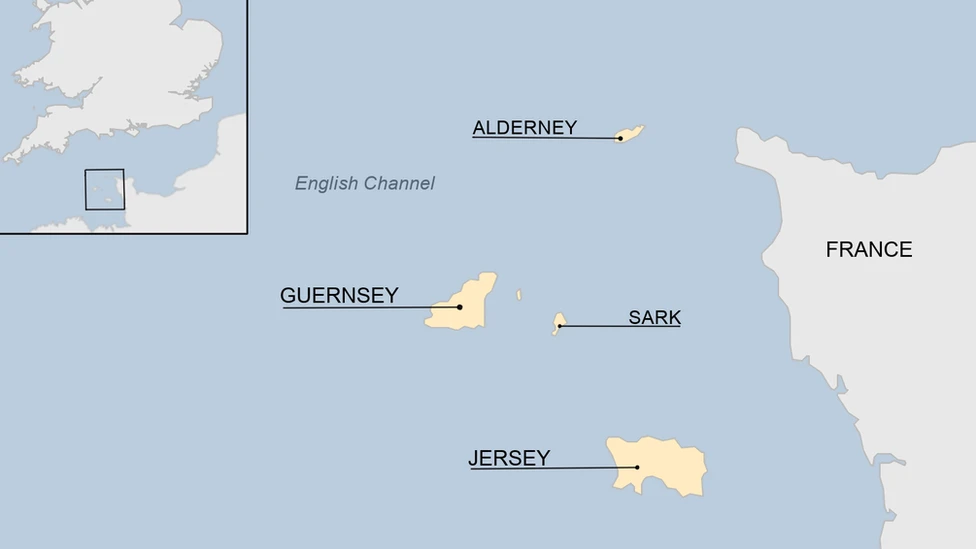
- The Channel Islands and the Isle of Man are closely linked with the UK but are not part of it
- They have their own governments and are called ‘Crown dependencies’
- The Channel Islands are near France, comprising two main bailiwicks: Jersey and Guernsey, with key islands including Alderney, Sark, and Herm
- British Overseas Territories (BOTs)
- 14 territories linked to the UK but outside the British Isles, like Bermuda, Cayman Islands, Falklands, Gibraltar, British Virgin Islands, and St Helena,
- each with self-governance but the UK responsible for defence and foreign affairs, forming part of the UK’s sovereign territory.
- The UK is governed by the parliament sitting in Westminster.
- Scotland, Wales and Northern Ireland also have parliaments or assemblies of their own, with devolved powers in defined areas.
_in_the_World_(+Antarctica_claims).svg) {width:400px}
{width:400px}
Chapter 3: A long and illustrious history
Early Britain
Stone Age (10_000 years) -> Iron Age (AD 43)
- Stone Age
- First people to live in Britain : Hunter-gatherers who followed herds of deer and horses
- Britain was connected by land bridge to continent, 10_000 years ago separated from continent via a Channel
- 6,000 years ago : first farmers arrived, whose ancestors came from South-East Europe.
- Build houses, tombs and monuments
- Stone age monument -
Stonehedgein Wiltshire, probably a gathering place for seasonal ceremonies
Skara Braeon Orkney - best preserved prehistoric village in northern Europe about life at the end of Stone Age- Orkney Island is situated off the north coast of Scotland

- Bronze Age
- 4,000 years ago
- People lived in roundhouses and buried their dead in tombs called
round barrows. - Made beautiful objects in bronze and gold, including tools, ornaments and weapons.
- Iron Age
- People learned to make weapons and tools out of iron
- People still lived in roundhouses, grouped together into larger settlements, and sometimes defended sites called
Hill Forts.- Hill fort ->
Maiden Castlein the English county of Dorset. - Most people were farmers, craft workers or warriors.
- The language they spoke was part of the Celtic language family.
- Hill fort ->
- Related languages are still spoken today in some parts of Wales, Scotland and Ireland.
- Made the first coins to be minted in Britain, some inscribed with the names of Iron Age kings.
The Romans (BC 55 - AD 410)
- BC 55 : Unsuccessful invasion by Julius Caesar.
- 100 years Britain remained separate from the Roman Empire.
- AD 43 : Roman invasion by
Emperor Claudiusoccupied almost all of Britain.- One of the tribal leaders who fought against the Romans was
Boudicca, the queen of the Iceniin what is now eastern England. - Statue of her on Westminster Bridge in London, near the Houses of Parliament.
- One of the tribal leaders who fought against the Romans was
- Scotland were never conquered by the Romans.
Emperor Hadrianbuilt a wall in the north of England to keep out thePicts (ancestors of the Scottish people).- Parts of Hadrian’s Wall, including the forts of Housesteads and Vindolanda, can still be seen.
- UNESCO World Heritage Site.
- Romans remained in Britain for 400 years.
- They built roads and public buildings, created a structure of law, and introduced new plants and animals.
- Roman army left Britain in AD 410 to defend other parts of the Roman Empire and never returned.
- First Christian communities began to appear in Britain during the 3rd and 4th centuries AD.
The Anglo-Saxons (AD 410 - AD 789)
- Britain was again invaded by tribes from northern Europe: the Jutes, the Angles and the Saxons.
- By about AD 600, Anglo-Saxon kingdoms were established in Britain.
- The burial place of one of the kings was at
Sutton Hooin modern Suffolk.- was buried with treasure and armour, all placed in a ship which was then covered by a mound of earth.
- Wales and Scotland, remained free of Anglo-Saxon rule.
- Anglo-Saxons were not Christians when they first came to Britain.
- missionaries came to Britain to preach about Christianity.
- Missionaries from Ireland spread the religion in the north
St Patrick: Patron saint of IrelandSt Columba: Founded a monastery on the island of Iona, Scotland.
- Missionaries from Rome spread the religion in the South
St Augustine: First Archbishop of Canterbury.
The Vikings (AD 789 - AD 1066)
- Vikings came from Denmark and Norway in AD 789
- They came to raid coastal towns and take away goods and slaves.
- Began communities in the east of England and Scotland.
King Alfred the Greatdefeated the Vikings.- Anglo-Saxon kingdoms in England united under King Alfred the Great.
- Viking invaders stayed in east and north of England.
- Stayed in area known as the
Danelaw(many places names there, such as Grimsby and Scunthorpe, come from the Viking languages).
- Stayed in area known as the
- Anglo-Saxon kings continued to rule, except for a short period when there were Danish kings.
- First of these was
Cnut, also calledCanute. (Danish King)
- First of these was
- In the north, the threat of attack by Vikings had encouraged the people to unite under one king,
Kenneth MacAlpin.- The term
Scotlandbegan to be used to describe that country.
- The term
Norman Conquest (AD 1066 - AD 1154)
- 1066 : Invasion led by
William, the Duke of Normandy(from France) defeatedHarold(Saxon King of England) inBattle of Hastings.- William became king of England and is known as
William the Conqueror. - Battle is commemorated in a great piece of embroidery, known as the
Bayeux Tapestry, which can still be seen in France today.
- William became king of England and is known as
Domesday Book: William sent people to draw up lists of all the towns and villages.- The people who lived there, who owned the land and what animals they owned were also listed.
- Norman Conquest was the last successful foreign invasion of England.
The Middle Ages (Medieval Era 1200-1450)
War at home and abroad
- Time of almost constant war in Britain for land.
- WALES
- 1284 : King Edward I introduced the Statute of Rhuddlan in Wales (Wales under Crown of England)
- Huge castles, including Conwy and Caernarvon, were built to maintain this power.
- 15th century : Last Welsh rebellions had been defeated.
- English laws and the English language were introduced.
- 1284 : King Edward I introduced the Statute of Rhuddlan in Wales (Wales under Crown of England)
- SCOTLAND
- 1314 :
Robert the Bruce, defeated the English at theBattle of Bannockburn, and Scotland remained unconquered by the English.
- 1314 :
- NORTHERN IRELAND
- English first went to Ireland as troops to help the Irish king.
- 1200 : English ruled an area of Ireland known as the
Pale, around Dublin. - Some of the important lords in other parts of Ireland accepted the authority of the English king.
- WALES
- Also fought Wars Abroad
- Hundred Years War with France lasted 116 years.
- 1415 : Battle of Agincourt
- King Henry V’s vastly outnumbered English army defeated the French.
- English left France in the 1450s.
The Black Death
- Normans used a system of land ownership known as feudalism.
- The king gave land to his lords in return for help in war.
- Landowners had to send certain numbers of men to serve in the army.
- Some peasants had their own land but most were serfs.
- In the north of Scotland and Ireland, land was owned by members of the ‘clans’ (prominent families).
- 1348 : plague, came to Britain. This was known as the
Black Death.- One third of the population of England died and a similar proportion in Scotland and Wales.
- This was one of the worst disasters ever to strike Britain.
- There were labour shortages and peasants began to demand higher wages.
- People left the countryside to live in the towns.
- In the towns, growing wealth led to the development of a strong middle class.
Legal and political changes
- Parliament began to develop.
- There were few formal limits to the king’s power until 1215.
- 1215 : charter of rights called the Magna Carta (which means the Great Charter)
- even the king was subject to the law.
- protected the rights of the nobility and restricted the king’s power to collect taxes or to make or change laws.
- King John
- Parliaments called for the king in England had two separate parts, known as Houses, were established.
- House of Lords : The nobility, great landowners and bishops
- House of Commons : Smaller landowners, and wealthy people from towns and cities were elected
- Similar Parliament developed in Scotland. It had three Houses, called Estates: the lords, the commons and the clergy.
- Legal System
- In England, judges developed ‘common law’ by a process of precedence (that is, following previous decisions) and tradition.
- In Scotland, the legal system developed slightly differently and laws were ‘codified’ (that is, written down).
A distinct identity
- By 1400, in England, official documents were being written in English, and English had become the preferred language of the royal court and Parliament.
Geoffrey Chaucerwrote a series ofpoemsin English about a group of people going to Canterbury on a pilgrimage.- This collection of poems is called The Canterbury Tales.
- It was one of the
first books to be printedby William Caxton, the first person in England to print books using a printing press.
- In Scotland, poets began to write in the Scots language.
- One example is
John Barbour, who wrote The Bruce about the Battle of Bannockburn.
- One example is
- Castles were made, many are now ruins
- Windsor and Edinburgh, are still in use.
- Great cathedrals – for example, Lincoln Cathedral – were also built, and many of these are still used for worship.
- Several of the cathedrals had windows of stained glass, telling stories about the Bible and Christian saints.
- The glass in York Minster is a famous example.
- England was an important trading nation. English wool became a very important export.
The Wars of the Roses
- 1455 : Civil war to decide king of England.
- fought between the supporters of two families:
- the House of Lancaster - red rose
- the House of York - White rose
- This war was called the Wars of the Roses
- fought between the supporters of two families:
- 1485 : The war ended with the Battle of Bosworth Field
- House of York King Richard III was killed
- House of Lancaster won, King Henry VII (Henry Tudor)
- First ever king of this family
- Henry then married King Richard’s niece, Elizabeth of York, and united the two families.
- The symbol of the House of Tudor was a red rose with a white rose inside it as a sign that the Houses of York and Lancaster were now allies.
The Tudors and Stuarts
- King Henry VII (Henry Tudor) after winnning the war of roses.
- Made Policy of centralising power to make sure his position as king was secure.
- His son Henry VIII continued the policy of centralising power.
- Henry VIII was most famous for breaking away from the Church of Rome and marrying six times.
- To divorce his first wife, Henry needed the approval of the Pope.
- When the Pope refused, Henry established the Church of England.
- In this new Church, the king, not the Pope, would have the power to appoint bishops and order how people should worship.
- During the reign of Henry VIII,
- Wales became formally united with England by the Act for the Government of Wales.
- Henry VIII took the title ‘King of Ireland’.
six wives of Henry VIII
- Catherine of Aragon - daughter Mary survided. King decided to divorce once Catherine was too old to give child. King Henry VIII wanted son as Heir.
- Anne Boleyn - Had daughter Elizabeth. Anne was accused of taking lovers and executed at the Tower of London.
- Jane Seymour - Gave son Edward, but Jane died after giving birth.
- Anne of Cleves - Political reasons and then divorced
- Catherine Howard - cousin of Anne Boleyn, also accused of taking lovers and executed.
- Catherine Parr - was a widow, after king she married again and then died.
Religious conflicts
- Reformation was happening across Europe.
- movement against the authority of the Pope and the ideas and practices of the Roman Catholic Church.
- The Protestants formed their own churches.
- They read the Bible in their own languages instead of in Latin; they did not pray to saints or at shrines; and
- they believed that a person’s own relationship with God was more important than submitting to the authority of the Church.
- Edward VI - Henry VIII was succeeded by his son Edward VI, who was strongly Protestant.
- Book of Common Prayer was written to be used in the Church of England
- Edward died at the age of 15 after ruling for just over six years
- Queen Mary : devout Catholic and persecuted Protestants that’s why known as
Bloody Mary - Elizabeth I : was a Protestant
- one of the most popular monarchs in English history.
- 1588 : when the English defeated the Spanish Armada (a large fleet of ships), which had been sent by Spain to conquer England and restore Catholicism.
Mary, Queen of Scots
- The queen of Scotland, Mary Stuart (‘Mary, Queen of Scots’) was a Catholic.
- She was only a week old when her father died and she became queen.
- Much of her childhood was spent in France.
- She gave her throne to her Protestant son, James VI of Scotland.
- Mary was Elizabeth I’s cousin and hoped that Elizabeth might help her,
- but Elizabeth suspected Mary of wanting to take over the English throne, and kept her a prisoner for 20 years.
- Mary was eventually executed, accused of plotting against Elizabeth I.
Exploration, Poetry and Drama
- Elizabeth I time was growing patriotism
- Sir Francis Drake (Commander to defeat Spannish Armada)
- His ship the Golden Hind was one of first to sail right around the world.
- Started colonise eastern coast of America
William Shakespeare
Most famous plays
- Midsummer Night’s Dream
- Hamlet,
- Macbeth
- Romeo and Juliet
Lines from his plays and poems which are often still quoted include:
- Once more unto the breach (Henry V)
- To be or not to be (Hamlet)
- A rose by any other name (Romeo and Juliet)
- All the world’s a stage (As You Like It)
- The darling buds of May (Sonnet 18 – Shall I Compare Thee To a Summer’s Day)
James VI and I
- Elizabeth I never married and so had no children of her own to inherit her throne.
- When she died in 1603 her heir was her cousin James VI of Scotland.
- He became King James I of England, Wales and Ireland but Scotland remained a separate country.
- new translation of the Bible into English. This translation is known as the ‘King James Version’ or the ‘Authorised Version’
- James I and his son Charles I were less skilled politically.
- Both believed in the ‘Divine Right of Kings’: the idea that the king was directly appointed by God to rule.
Chapter 4: A modern, thriving society
Chapter 5: The UK government, the law and your role
External References
- thelifeinuktest
- lifeintheuktestweb
- summary notes - lifeintheuktests